Honeywell HPA300 Air Purifier Review: Powerful Performance
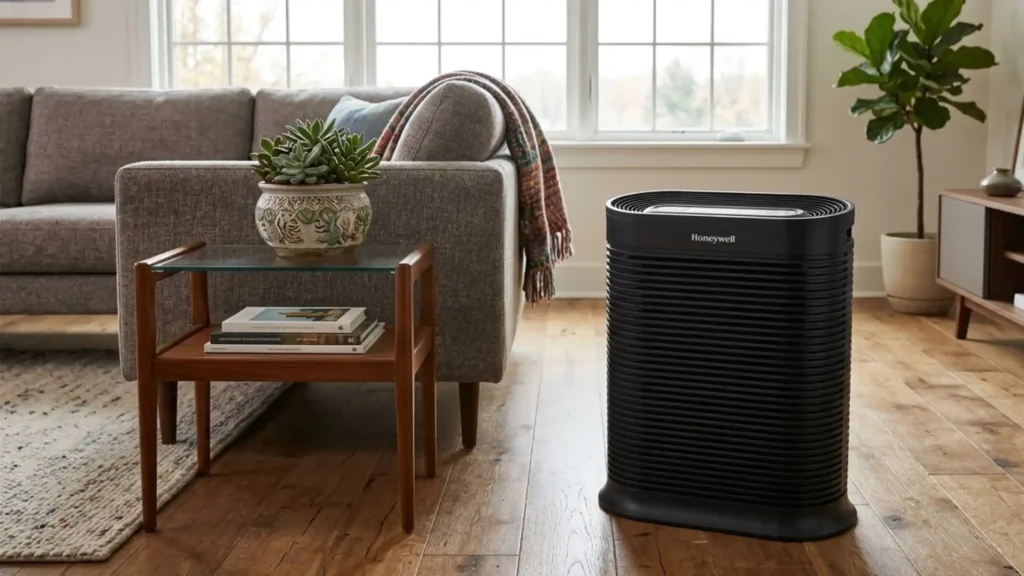
You don’t always need a flashy air purifier with a glowing display and a smartphone app. Sometimes you just need something that turns on, works hard, and keeps your air clean without any fuss. That’s the entire philosophy behind the Honeywell HPA300, and for a certain kind of buyer, it delivers exactly what it promises. The Honeywell HPA300 comes from one of the most trusted names in home appliances. Honeywell has deep roots in aerospace, healthcare, and industrial air quality, which explains why their air purifiers have earned the reputation of being “The Doctor’s Choice.” Their HPA series covers a range of room sizes, and the HPA300 sits comfortably in the middle of that range as a strong gauge of what the lineup offers. Let’s break down everything you need to know before deciding if this is the right unit for your home. What Buyers Typically Look for in an Air Purifier Honeywell HPA300 View on Amazon Before diving into the full Honeywell HPA300 review, here’s a quick look at what most people prioritize when shopping for an air purifier: CADR rating (how fast the unit cleans the air) Coverage area relative to room size Filtration quality and filter replacement costs Noise levels at different fan speeds Ease of use and control panel simplicity Annual running costs including electricity and filters Build quality and portability The honeywell air purifier hpa300 scores well on most of these, with one notable exception we’ll get to shortly. Quick Specs at a Glance Honeywell HPA300 Compact floor footprint that doesn’t dominate a room Exceptionally high CADR for a unit at this price point Check on Amazon View on Amazon Price: Check at Amazon Coverage: Medium-sized rooms Filtration: 3-stage: Activated carbon pre-filter + 3 HEPA filters Noise Level: 59.5 dBA Power Draw (Turbo) 76 watts Practical Over Pretty There’s no delicate way to say this. The Honeywell HPA300 is not going to win any design awards. It’s a flat-base, matte black unit that looks exactly like what it is: a budget air purifier built to work, not to impress guests. That said, practicality has its own appeal. The unit weighs 17 lbs and features inset handles on each side, making it manageable to carry between rooms. The flat base means it sits flush on carpet without leaving marks, which some users actually prefer over wheeled designs. The metallic touch control panel requires a firm press, and there have been some reports of the front panel not staying clicked in during transport. It’s a minor gripe, but worth knowing if you plan to move it frequently between rooms. If modern aesthetics matter to you, the Honeywell HPA300 may feel underwhelming next to sleeker competitors. But if you want a unit that blends into the background and simply runs, this design philosophy works in its favor. 3-Stage Filtration That Covers the Basics The filtration system in the Honeywell HPA300 uses a thoughtful three-part approach: Stage 1: Activated Carbon Pre-Filter The carbon and pre-filter are combined into a single sheet. This layer captures larger particles like dust and hair while also adsorbing odors and VOCs from the air. Honeywell recommends replacing this pre-filter every three months. Stage 2 and 3: Three HEPA Filters Instead of one large HEPA filter, the HPA300 uses three smaller individual filters. This is actually a smart design choice. If one filter becomes saturated before the others, you only need to replace that single unit rather than the entire set. Honeywell recommends replacing the HEPA filters every 12 months. One honest caveat: the activated carbon sheet is relatively thin compared to units with loose-fill carbon beds. For moderate everyday odors it performs fine, but if you’re dealing with heavy cooking smells or strong pet odors, a unit with a thicker carbon layer may serve you better. Replacing all filters takes around 30 seconds, which is about as easy as it gets. Where the HPA300 Truly Shines This is where the Honeywell HPA300 separates itself from the competition in its price range. In independent testing conducted at HouseFresh, the HPA300 cleared a 728 cubic foot room of incense smoke pollution in just 20 minutes on Turbo mode. That result places it within two minutes of the fastest air purifier tested across all reviews, and it matched units costing nearly double the price. Performance at Different Fan Speeds Fan Speed Noise Level Time to Clear Test Room Speed 1 (Germ) 43.6 dBA 50 minutes Speed 2 (General Clean) 48.8 dBA 34 minutes Speed 3 (Allergen) 53.9 dBA Not specified Speed 4 (Turbo) 59.5 dBA 20 minutes The high CADR rating at this price point is genuinely rare. It comes from an unusually powerful fan, and that fan is both the greatest strength and the most significant weakness of the HPA300. View on Amazon The One Area Where It Falls Short At Turbo speed, the Honeywell HPA300 runs at 59.5 dBA. That is noticeable. There is no silent mode, no sleep mode, and no quiet setting designed specifically for overnight use. The dimmer button can turn off the blue indicator lights, which helps in a bedroom environment, but the fan noise itself remains. If you plan to run this unit while working from home, watching television, or sleeping, you will need to drop to Speed 1 or Speed 2. At 43.6 dBA on Speed 1, it becomes much more liveable, though the trade-off is longer cleaning time. For large open spaces where noise is less of a concern, this barely matters. For bedrooms and nurseries, it is worth considering a quieter alternative. Simple Controls With No Learning Curve The control panel on the Honeywell HPA300 is refreshingly straightforward. There is no app to configure, no air quality indicator to interpret, and no ionizer to worry about. The panel gives you: Four fan speeds (Germ, Generally Clean, Allergen, Turbo) A timer with 2, 4, and 8-hour options Filter replacement indicator lights A dimmer button for the display lights For anyone who finds smart home technology more frustrating