
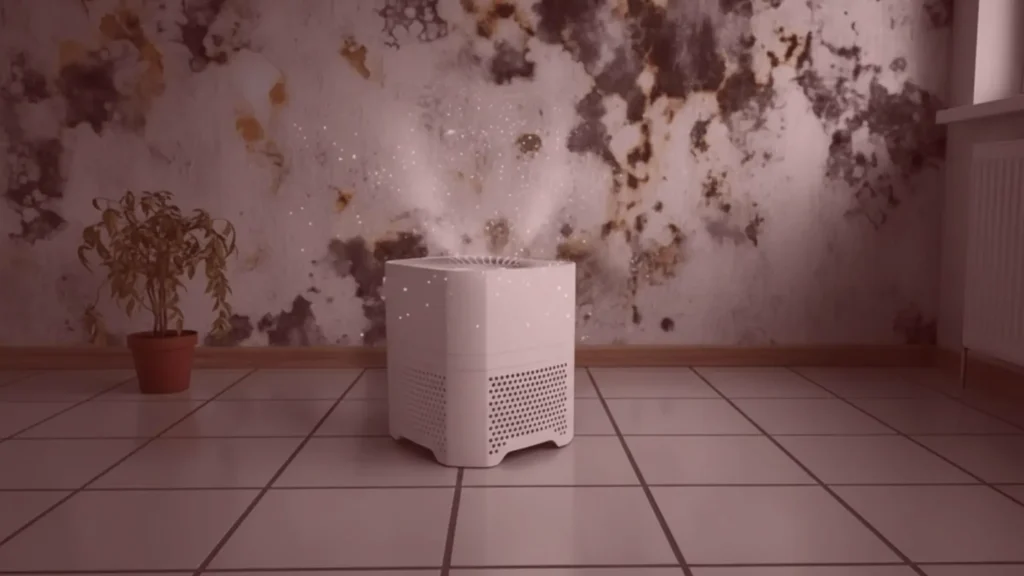
How Do Air Purifiers Help With Mold? Here’s the Truth
What if I told you that a silent, invisible threat in your home is becoming more deadly every year? According to data from the CDC, deaths linked to mold and fungal infections have skyrocketed from just 450 in 1969 to over 7,000 by 2021. Stories like these are terrifying, and this fear of a hidden danger in your home is exactly the kind of thing some air purifier manufacturers use to sell you overpriced machines with promises they can’t always keep. Here’s what most marketing won’t tell you: do air purifiers help with mold? Yes, but probably not in the way you think. Air purifiers excel at removing airborne mold spores from your breathing space, preventing them from entering your lungs and triggering allergic reactions or respiratory issues. However, they do absolutely nothing about active mold growth on your walls, in your carpet, or behind your drywall. An air purifier treats the symptom, not the cause. In this comprehensive guide, we’re cutting through all the marketing hype to explain what you actually need to know about mold, air purifiers, and humidity control before you waste your money. The truth about whether air purifiers help with mold requires understanding both what these devices can accomplish and, more importantly, their limitations. Let’s start by establishing realistic expectations about what air purification can and cannot do for mold problems. Understanding Mold: What You’re Actually Fighting Before discussing whether air purifiers help with mold, you need to understand what you’re trying to combat. Mold isn’t a single organism but thousands of fungal species that release microscopic spores into the air as part of their reproductive cycle. These mold spores are everywhere, all the time, just lying dormant in your home, on your furniture, and in your air ducts. Mold spores only become a problem when conditions allow them to germinate and grow. The three requirements for mold growth are: Moisture: Research shows that mold starts growing at 68% relative humidity or higher. At these levels, surfaces remain damp enough for spores to germinate and establish colonies. Food Source: Mold feeds on organic materials including wood, drywall, carpet, paper, and even dust. Since these materials exist in virtually every home, food availability isn’t usually the limiting factor. Temperature: Most mold species thrive between 60°F and 80°F, the same temperature range humans prefer for comfort. This means your climate controlled home provides ideal conditions. Common Indoor Mold Species Different mold species produce different health effects and grow in different conditions: Aspergillus: One of the most common indoor molds, with spores measuring 2 to 5 microns wide. Causes respiratory issues and allergic reactions in sensitive individuals. According to the EPA, this species is particularly concerning for people with compromised immune systems. Stachybotrys (Black Mold): The infamous “toxic black mold” that grows on water damaged materials. Produces mycotoxins that can cause serious health problems with prolonged exposure. Cladosporium: Commonly found on fabrics, wood surfaces, and in HVAC systems. One of the most frequently identified indoor molds. Penicillium: Often appears as blue or green fuzzy growth on bread, cheese, and other foods, but also colonizes water damaged building materials. Alternaria: Commonly found in damp areas like showers, bathtubs, and beneath sinks. Known allergen that triggers asthma symptoms. The key insight for answering do air purifiers help with mold is understanding that these devices address airborne spores, not the mold colonies producing them. An air purifier can prevent you from breathing spores, but it won’t stop the colony behind your washing machine from growing. Do Air Purifiers Help With Mold? The Science Behind Spore Removal The answer to do air purifiers help with mold depends entirely on what you mean by “help.” Let’s be precise about what air purifiers can and cannot accomplish: What Air Purifiers CAN Do: Capture Airborne Mold Spores: Air purifiers equipped with HEPA filters or equivalent filtration can capture mold spores as they float through the air. Since Aspergillus spores measure 2 to 5 microns, and HEPA filters capture 99.97% of particles as small as 0.3 microns, filtration is highly effective for spore removal. Reduce Spore Concentration: By continuously cycling room air through filters, air purifiers reduce the concentration of airborne mold spores. Lower spore counts mean less likelihood of inhalation and reduced allergic reactions. Prevent Spore Spread: When mold colonies release spores, air purifiers can capture them before they spread to other rooms or settle on surfaces where new colonies could establish. Improve Respiratory Symptoms: For individuals with mold allergies or asthma, removing airborne spores reduces exposure and can significantly improve symptoms like sneezing, congestion, and breathing difficulty. What Air Purifiers CANNOT Do: Kill Active Mold Growth: Air purifiers have no effect on mold colonies growing on surfaces. The fungus attached to your wall, ceiling, or carpet continues growing regardless of air purification. Remove Surface Spores: Mold spores that have settled on furniture, carpets, or other surfaces aren’t floating in the air, so air purifiers can’t capture them. These settled spores can become airborne again when disturbed. Address Humidity Issues: Air purifiers don’t reduce moisture levels that enable mold growth. Without humidity control, new colonies will continue establishing even as you remove airborne spores. Prevent Future Growth: Removing today’s airborne spores doesn’t prevent tomorrow’s mold colonies from releasing new spores if moisture problems persist. According to HouseFresh’s comprehensive guide, “An air purifier removes the symptom, not the cause. To win the war against mold, you must control the one thing it needs to survive: water.” Do You Need an Expensive HEPA Filter to Remove Mold? One of the biggest misconceptions when asking do air purifiers help with mold is that you need the most expensive medical grade HEPA filters available. Marketing materials suggest you need HEPA H13 or H14 filtration, but the reality is more nuanced. Since airborne mold spores from species like Aspergillus measure 2 to 5 microns wide, they can be easily removed by many different types of particle filters. A higher grade filter can actually reduce the speed at which you